
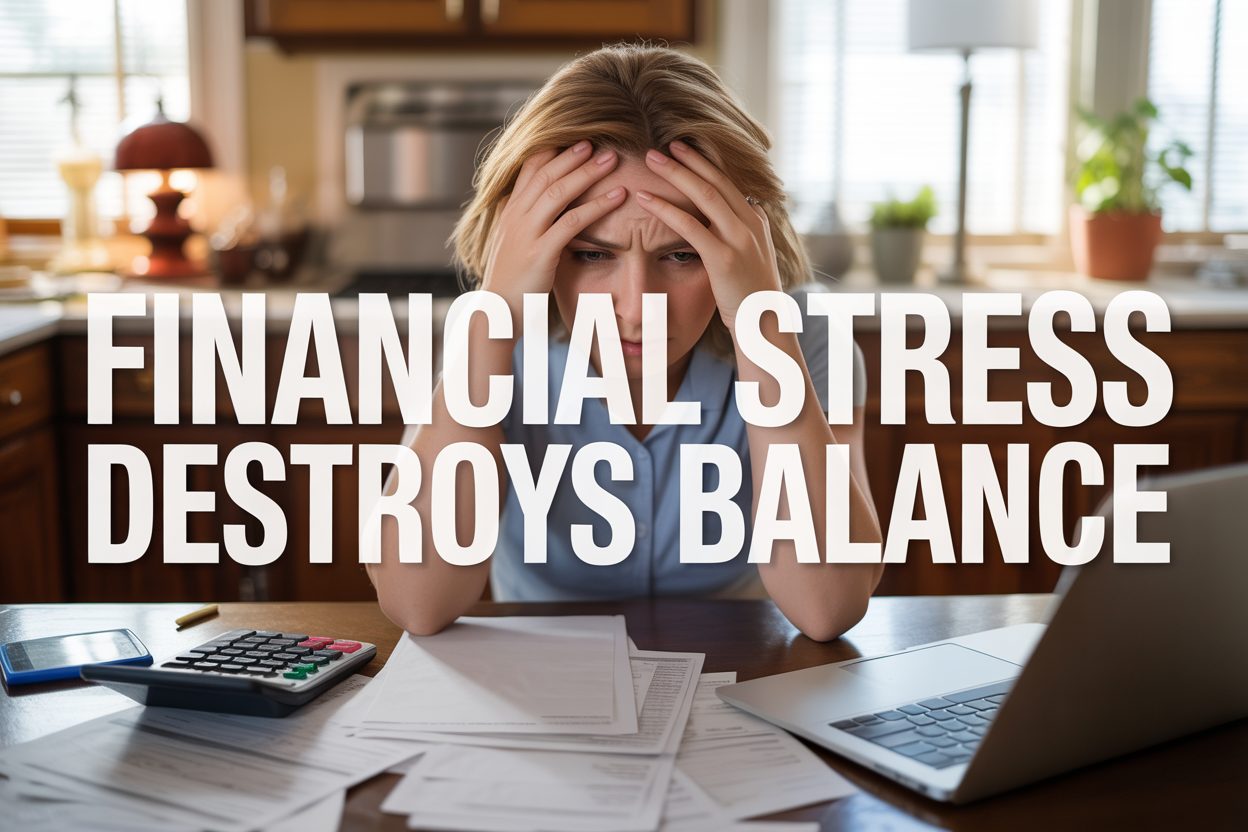
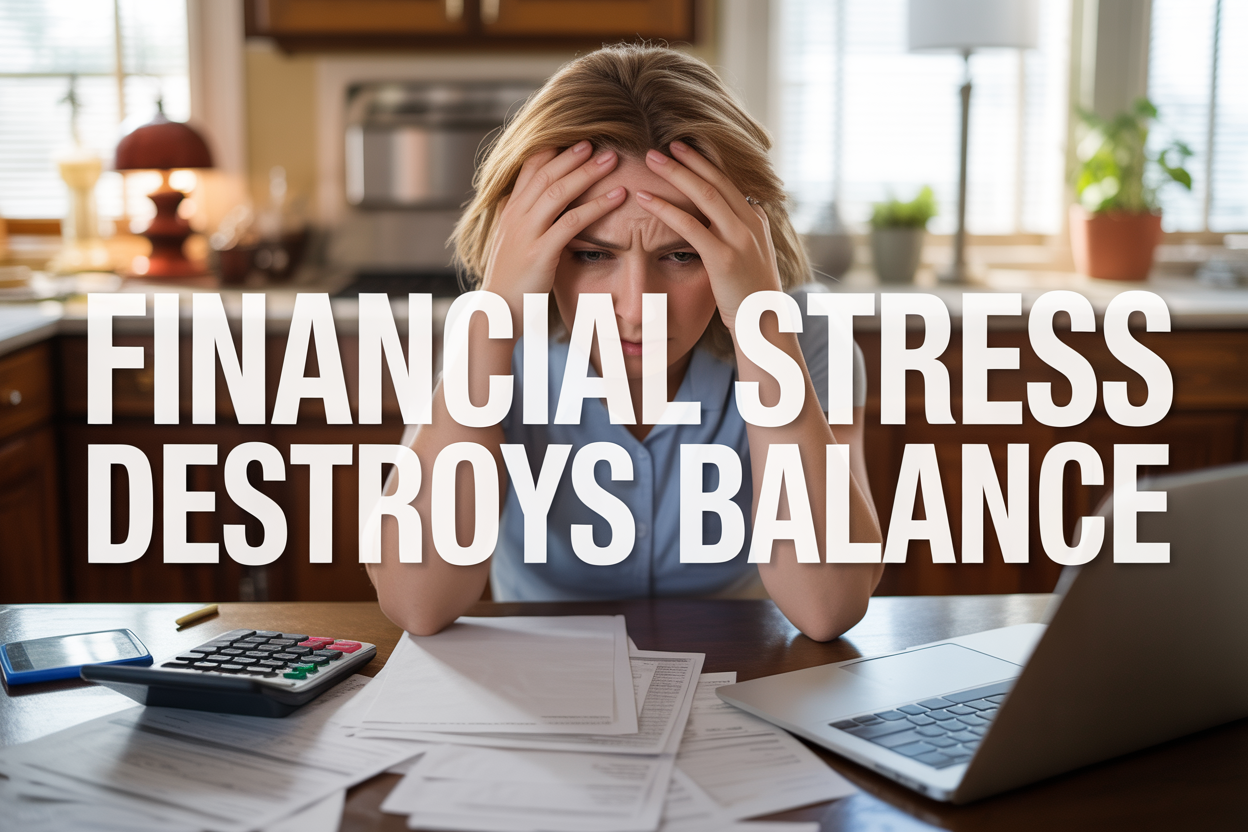
Financial stress and life balance don’t mix well together. When money worries take over your thoughts, everything else falls apart – your health, relationships, work performance, and peace of mind.
I Have made this guide from my own experience is for middle class families, working professionals, and anyone feeling overwhelmed by financial pressure who wants practical solutions that work without requiring a massive income boost.
Money stress affects your daily life in ways you might not even realize. Late-night worry sessions about bills can trigger anxiety and burnout. Your relationships suffer when financial tension creates conflict at home. Your job performance drops when you can’t focus because you’re mentally calculating expenses.
We’ll explore how financial stress affects life balance by examining its impact on your physical and mental health, plus the ripple effects that damage your closest relationships. You’ll learn ways to reduce financial stress naturally through realistic budgeting strategies and emergency fund techniques that actually fit your current income. Finally, we’ll cover debt management approaches and income diversification methods that help you regain control and restore balance to your life.
The goal isn’t to become wealthy overnight – it’s to reduce financial anxiety so you can enjoy the life you’re already living.
How Financial Stress Disrupts Your Physical and Mental Health

Sleep Deprivation Caused by Money Worries
Your brain doesn’t shut off when your head hits the pillow, especially when bills are piling up. Financial stress creates a mental loop that keeps you tossing and turning at 3 AM, calculating how much you owe versus what’s coming in. This chronic sleep disruption from money stress and mental health concerns affects 73% of Americans regularly.
When you’re financially stressed, your mind races through worst-case scenarios: losing your home, disappointing your family, or falling deeper into debt. This mental chatter triggers your sympathetic nervous system, flooding your body with cortisol and adrenaline – the exact opposite of what you need for restful sleep.
Poor sleep quality from financial anxiety creates a vicious cycle. You wake up exhausted, making poor financial decisions throughout the day, which leads to more stress and another sleepless night. Research shows that people experiencing financial stress and mental health problems get an average of 1.5 hours less sleep per night than those without money worries.
Increased Risk of Anxiety and Depression
Financial stress doesn’t just affect your wallet – it rewires your brain chemistry. Studies reveal that people facing money troubles are 2.5 times more likely to develop clinical depression and three times more likely to experience anxiety disorders.
Your brain interprets financial threats as survival threats, keeping you in a constant state of fight-or-flight. This chronic activation depletes neurotransmitters like serotonin and dopamine, which regulate mood and motivation. Financial stress in middle class families particularly hits hard because there’s often shame attached to struggling despite appearing successful on the surface.
The impact of financial stress on mental health compounds over time. What starts as occasional worry about bills escalates into persistent anxiety about the future. You might find yourself avoiding social situations, withdrawing from relationships, or losing interest in activities you once enjoyed. Depression from money stress often manifests as feelings of helplessness, worthlessness, and hopelessness about ever achieving financial stability.
Physical Symptoms That Impact Daily Performance
Money stress and mental health issues don’t stay in your head – they show up in your body in measurable ways. Chronic financial stress triggers a cascade of physical symptoms that make everyday tasks feel overwhelming.
Common physical manifestations include:
- Headaches and migraines from muscle tension
- Digestive issues like stomach pain, nausea, or irritable bowel syndrome
- Chest tightness and heart palpitations
- Muscle aches in your neck, shoulders, and back
- Chronic fatigue that doesn’t improve with rest
These symptoms aren’t just uncomfortable – they directly sabotage your ability to function at work and home. When your body is stuck in stress mode, cognitive functions like memory, concentration, and decision-making suffer dramatically. You might find yourself making mistakes at work, forgetting important deadlines, or struggling to focus during conversations.
How money stress affects daily life becomes a self-perpetuating cycle. Physical symptoms reduce your productivity, potentially affecting your income or job security, which creates more financial pressure and worsens your physical health.
Weakened Immune System from Chronic Stress
Financial anxiety literally makes you sick more often. Chronic stress from money worries suppresses your immune system, leaving you vulnerable to everything from minor colds to more serious infections. Studies show that people under significant financial stress get sick 32% more frequently than those with stable finances.
Cortisol, your primary stress hormone, acts like a natural immunosuppressant when elevated long-term. This hormonal imbalance reduces your body’s ability to produce infection-fighting white blood cells and slows down wound healing. You might notice that cuts and bruises take longer to heal, or that you catch every bug that goes around your office.
The financial stress causes anxiety and burnout cycle weakens your body’s defenses when you need them most. Getting sick means missing work, potential medical bills, and lost income – exactly the opposite of what you need when already struggling financially. Your body becomes trapped in a pattern where stress makes you sick, and being sick creates more stress.
Recovery from illness also takes longer when you’re financially stressed because your body can’t fully relax and repair itself. This prolonged recovery period can affect your work performance and relationships, creating additional layers of stress that keep your immune system compromised.
The Ripple Effects of Financial Anxiety on Personal Relationships

Strain on Marriage and Partnership Communication
Financial anxiety creates a perfect storm for relationship conflicts that can tear couples apart. When money becomes tight, even the smallest financial decisions transform into heated arguments. Partners who once made joint purchases without a second thought suddenly find themselves questioning every expense, from coffee runs to grocery choices.
The stress of unpaid bills and mounting debt makes people defensive and irritable. Simple conversations about household expenses become loaded discussions where blame and resentment bubble to the surface. One partner might feel overwhelmed by the pressure to earn more, while the other feels guilty about spending anything at all.
Communication patterns that emerge during financial stress:
- Avoiding money conversations entirely
- Keeping financial secrets from each other
- Blaming and finger-pointing about past decisions
- Making unilateral financial decisions without consulting the partner
- Using money as a weapon during arguments
Financial stress and mental health problems often intertwine, making it harder for couples to approach money discussions with clear heads. When anxiety levels run high, people tend to catastrophize situations, turning minor financial setbacks into relationship-ending crises.
Impact on Parenting and Family Dynamics
Children pick up on financial tension faster than most parents realize. Even when adults try to shield kids from money worries, the stress seeps into family interactions through shortened tempers, cancelled plans, and hushed conversations that stop when children enter the room.
Parents dealing with financial anxiety often struggle to maintain consistent discipline and patience. The constant worry about paying bills creates emotional exhaustion that leaves little energy for quality family time. Birthday parties get cancelled, family vacations become distant dreams, and children learn to stop asking for things they want.
How financial stress affects family relationships:
- Parents become more irritable and less emotionally available
- Children develop anxiety about their family’s security
- Family activities get restricted or eliminated
- Guilt around not providing enough for children
- Increased conflict between parents in front of kids
The impact of financial stress on middle class families can be particularly challenging because these families often had established lifestyles before money became tight. Children who were accustomed to certain privileges suddenly face restrictions they don’t understand, creating confusion and resentment within the family unit.
Social Isolation Due to Financial Shame
Financial anxiety doesn’t just strain intimate relationships – it pushes people away from their entire social network. The shame of not being able to afford dinner out with friends, contribute to group gifts, or maintain previous social standards leads many people to withdraw from their communities entirely.
Social invitations become sources of anxiety rather than joy. That weekend getaway with college friends becomes impossible when you can’t afford your share of the rental. The work happy hour turns into a financial calculation of whether you can spare twenty dollars for drinks and still make rent.
Social behaviors that emerge from financial shame:
- Declining invitations without explanation
- Making excuses to avoid social gatherings
- Gradually losing touch with friend groups
- Avoiding colleagues outside of work
- Stopping participation in community activities
This isolation creates a vicious cycle where people lose the emotional support they need most during difficult times. Friends and family members often want to help but don’t know how to approach someone who’s pulled away. The person struggling financially interprets this distance as judgment or rejection, deepening their shame and isolation.
Financial stress effects on relationships extend beyond just the immediate family circle. Professional relationships can suffer when someone feels too embarrassed to network or attend industry events. Community connections weaken when people can’t participate in local activities or volunteer opportunities that require any financial contribution.
The path back from this isolation requires acknowledging that money stress affects daily life for millions of people. Breaking the shame cycle starts with honest conversations about financial reality and finding ways to maintain relationships that don’t center around spending money.
Career and Professional Performance Decline Under Financial Pressure

Reduced Focus and Productivity at Work
Financial stress creates a mental fog that follows you everywhere, including your workplace. When you’re constantly worried about paying bills or covering unexpected expenses, your brain simply can’t dedicate its full attention to work tasks. Your mind keeps wandering to unpaid invoices, credit card balances, or that looming rent payment.
This scattered attention shows up in obvious ways – missing important details in emails, taking longer to complete routine tasks, or struggling to follow through on projects. You might find yourself reading the same paragraph multiple times or zoning out during meetings while calculating whether you can afford groceries this week.
The impact compounds quickly. Colleagues start noticing when you’re not performing at your usual level. Simple mistakes become more frequent, deadlines feel impossible to meet, and the quality of your work suffers. What used to take you an hour now stretches into half a day because financial anxiety keeps interrupting your thought process.
Poor Decision-Making When Desperate for Money
Money stress and mental health problems create a dangerous cycle where desperation clouds judgment. When you’re facing financial pressure, you’re more likely to make quick decisions that seem to offer immediate relief but create long-term problems.
You might accept the first job offer that comes along, even if it’s below your skill level or pays less than you’re worth. Or you could agree to work excessive overtime, sacrificing your health and personal relationships for extra cash. Some people take on multiple side gigs without considering how the additional stress will affect their primary job performance.
Financial desperation also pushes people toward get-rich-quick schemes or risky investments they wouldn’t normally consider. The promise of fast money becomes irresistible when you’re struggling to make ends meet, leading to poor choices that often worsen your financial situation.
Limited Career Growth Due to Financial Constraints
Financial stress and work life balance problems create barriers to professional advancement that go beyond your current performance. Career growth often requires investments that feel impossible when you’re living paycheck to paycheck.
Professional development opportunities like conferences, certifications, or additional training require upfront costs that seem out of reach. Networking events often involve expenses for transportation, meals, or professional attire that you simply can’t justify when you’re behind on bills.
The inability to take unpaid time off for skill development or job interviews limits your options. You might skip valuable learning opportunities or avoid pursuing better positions because you can’t afford to miss even a single day’s pay. This keeps you trapped in roles that don’t utilize your full potential or offer the growth you need to improve your financial situation.
Inability to Take Professional Risks
Financial anxiety creates a risk-averse mindset that prevents career advancement. When you’re barely covering your basic expenses, any change feels too dangerous to consider, even if it could lead to better opportunities.
You might stay in a job you dislike because it provides steady income, even when you know a career change could improve your long-term financial outlook. The fear of temporary income loss makes it impossible to pursue entrepreneurial ventures, freelancing opportunities, or career pivots that could ultimately increase your earning potential.
This risk paralysis extends to smaller workplace decisions too. You’re less likely to speak up with innovative ideas, volunteer for challenging projects, or negotiate for better compensation. The immediate need for financial stability overrides the strategic thinking required for career advancement, keeping you stuck in a cycle where financial stress prevents the very actions that could relieve that stress.
Creating a Realistic Budget That Actually Works for Your Lifestyle

Track Every Dollar to Identify Money Leaks
Most people have no clue where their money actually goes each month. You might think you’re spending $200 on groceries, but those quick stops at the convenience store, coffee runs, and impulse purchases can easily double that amount without you realizing it.
Start by tracking everything for at least two weeks—every coffee, every subscription, every unexpected expense. Use a simple app like Mint or YNAB, or just write it down in a notebook. The goal isn’t to judge yourself but to see the real picture.
Common money leaks to watch for:
- Subscription services you forgot about
- ATM fees from using out-of-network machines
- Late payment fees on bills
- Impulse purchases under $20 (they add up fast)
- Eating out when you planned to cook at home
Once you spot these patterns, you’ll be amazed at how much money you can redirect toward your actual priorities. Many people discover they’re spending $100-300 monthly on things they don’t really value.
Prioritize Essential Expenses Over Wants
When financial stress hits, everything feels urgent. Your brain tricks you into thinking you need that new gadget or those shoes on sale. But creating a budget that reduces financial anxiety means getting crystal clear about what’s truly essential.
Essential expenses (needs):
- Housing (rent/mortgage, utilities)
- Transportation (car payment, gas, public transit)
- Food (groceries, not restaurants)
- Insurance (health, auto, renters/homeowners)
- Minimum debt payments
- Basic clothing
Non-essential expenses (wants):
- Streaming services beyond one or two
- Dining out regularly
- New clothes when your current ones are fine
- Expensive hobbies or entertainment
- Premium versions of things when basic works
The 50/30/20 rule works for some people: 50% for needs, 30% for wants, 20% for savings and debt repayment. But if you’re dealing with financial stress, you might need to flip those percentages temporarily—maybe 70% needs, 10% wants, 20% financial goals.
Remember, this isn’t permanent deprivation. You’re creating breathing room so money stress doesn’t control your daily life.
Build Flexible Categories for Unexpected Costs
Life happens. Your car breaks down, your kid needs school supplies, or your phone dies unexpectedly. If your budget is too rigid, these normal occurrences will throw everything off track and spike your financial anxiety all over again.
Create these flexible budget categories:
| Category | Monthly Amount | What It Covers |
|---|---|---|
| Car Maintenance | $50-100 | Oil changes, repairs, registration |
| Home Repairs | $25-75 | Small fixes, replacements |
| Medical/Health | $30-100 | Copays, prescriptions, glasses |
| Miscellaneous | $50-100 | School fees, gifts, random needs |
Start small with these categories—even $25 per month builds up over time. If you don’t use the money one month, it carries over to create a bigger cushion for when you really need it.
Pro tip: Set up automatic transfers to a separate savings account for each category. When your car needs new brakes, the money is already there waiting. No credit card debt, no panic, no relationship fights about money.
This approach turns financial stress into financial confidence because you’re prepared for real life instead of hoping nothing goes wrong.
Emergency Fund Strategies to Reduce Financial Anxiety

Start Small with Achievable Savings Goals
Building an emergency fund doesn’t require dramatic lifestyle changes overnight. Most people fail at saving because they set unrealistic targets that feel overwhelming from the start. Instead of aiming for the traditional six-month expense buffer immediately, begin with a micro-goal of $25 or $50.
The psychology behind small wins creates momentum that larger goals simply can’t match. When you successfully save your first $100, your brain releases dopamine, reinforcing the positive behavior. This neurochemical reward system makes you want to continue saving, naturally building the habit without relying on willpower alone.
Break your ultimate emergency fund goal into bite-sized milestones:
- Week 1-4: Save $100 total
- Month 2-3: Reach $500
- Month 4-6: Hit $1,000
- Continue building from there
Each milestone deserves recognition. Celebrate these wins, even if it’s just acknowledging your progress in a journal. This approach reduces financial anxiety because you’re constantly achieving goals rather than feeling defeated by an enormous target that seems impossible to reach.
Automate Emergency Fund Contributions
Manual saving fails because it requires constant decision-making, and decision fatigue is real. Every time you manually transfer money to savings, your brain evaluates whether you “need” that money elsewhere right now. Automation removes this internal negotiation entirely.
Set up automatic transfers for the day after your paycheck arrives. This “pay yourself first” strategy treats your emergency fund like any other essential bill. Your checking account learns to operate with the reduced amount, and you adapt your spending accordingly without feeling deprived.
Start with automatic transfers of 2-5% of your income. If your monthly income is $4,000, begin with $80-200 monthly transfers. The key is consistency, not the amount. A steady $50 monthly transfer outperforms sporadic $200 contributions because it builds the saving habit into your financial routine.
Consider using separate banks for your emergency fund to create healthy friction. When your emergency money sits in a different institution from your checking account, you’re less likely to dip into it for non-emergencies. This geographic separation acts as a natural pause button, giving you time to evaluate whether you’re facing a true emergency.
Choose High-Yield Accounts for Maximum Growth
Your emergency fund shouldn’t just sit there losing value to inflation. High-yield savings accounts and money market accounts offer significantly better returns than traditional savings accounts, sometimes 10-20 times higher interest rates.
Online banks typically offer the best rates because they have lower overhead costs than traditional brick-and-mortar institutions. Banks like Marcus by Goldman Sachs, Ally Bank, and Capital One 360 regularly offer rates above 4%, while traditional banks often provide less than 0.5%.
| Account Type | Average Interest Rate | Liquidity | FDIC Protection |
|---|---|---|---|
| Traditional Savings | 0.01-0.50% | High | Yes |
| High-Yield Savings | 4.00-5.50% | High | Yes |
| Money Market | 3.50-5.00% | Medium | Yes |
| CDs | 4.50-6.00% | Low | Yes |
Money market accounts often provide check-writing privileges and debit cards, offering slightly more accessibility than traditional savings accounts. However, they may require higher minimum balances, typically $1,000-5,000.
Avoid the temptation to invest emergency funds in stocks, bonds, or volatile assets. Emergency money needs to be immediately accessible and stable in value. Even conservative investments can lose value precisely when you need the money most, defeating the purpose of financial security.
Determine Your Ideal Emergency Fund Size
The standard advice of six months’ expenses works for some people but feels impossible for others dealing with financial stress. Your ideal emergency fund size depends on your specific situation, not generic financial rules.
Start by calculating your true monthly survival expenses, not your current spending. Include only essential items:
- Housing (rent/mortgage, utilities)
- Transportation (car payment, insurance, gas)
- Food (groceries, not dining out)
- Insurance premiums
- Minimum debt payments
- Basic phone service
This survival number is likely 30-50% lower than your current monthly expenses. If your total monthly spending is $5,000 but survival expenses are $3,000, you only need to save for the lower amount.
Consider these factors when determining your fund size:
Job Security Factors:
- Stable employment with union protection: 3-4 months
- Freelance or contract work: 6-8 months
- Single-income household: 6-9 months
- Dual-income household: 4-6 months
Health and Family Considerations:
- Chronic health conditions requiring ongoing care
- Elderly parents who might need financial support
- Children with special needs
- Property ownership vs. renting
People experiencing financial anxiety often feel pressure to build massive emergency funds quickly, which ironically increases their stress. Remember that any emergency fund is better than none. A $1,000 buffer handles most common financial surprises and provides tremendous peace of mind compared to living paycheck to paycheck.
Once you hit your initial target, you can always increase it gradually. The goal is financial security, not perfection.
Debt Management Techniques That Restore Peace of Mind

Snowball vs Avalanche Methods for Debt Payoff
When financial stress feels overwhelming, having a clear debt payoff strategy can bring immediate relief. Two proven methods stand out for their effectiveness in reducing financial anxiety while creating momentum toward debt freedom.
The debt snowball method focuses on paying minimum payments on all debts while putting any extra money toward the smallest balance first. Once that smallest debt disappears, you roll that payment into the next smallest debt. This approach creates psychological wins that combat the mental health problems that come with financial stress. Every eliminated debt provides a boost of confidence and reduces the number of bills weighing on your mind.
The debt avalanche method targets the highest interest rate debt first while maintaining minimum payments on everything else. Mathematically, this saves more money over time since you’re eliminating the most expensive debt first. This method works best for people who stay motivated by knowing they’re optimizing their financial strategy.
| Method | Pros | Cons | Best For |
|---|---|---|---|
| Snowball | Quick psychological wins, builds momentum | Potentially higher interest costs | Those needing motivation boosts |
| Avalanche | Saves most money on interest | Slower initial progress feeling | Mathematically-minded individuals |
Choose the snowball method if financial stress and anxiety make it hard to stay motivated. The quick wins help restore your sense of control and reduce the daily mental burden of multiple debts.
Negotiate Lower Interest Rates with Creditors
Many people don’t realize that credit card companies often negotiate when asked directly. A simple phone call can reduce your interest rates by 2-5 percentage points, immediately decreasing your financial stress without changing your income.
Start by gathering information about your payment history, current credit score, and competing offers from other credit cards. Call the customer retention department (not general customer service) and explain your situation honestly. Mention that you’re working to reduce financial stress and want to stay with their company but need better terms.
Key negotiation points that often work:
- Temporary hardship programs: Many creditors offer 6-12 month reduced payment plans
- Interest rate reductions: Ask for a permanent rate decrease based on your payment history
- Fee waivers: Request removal of late fees or annual fees as goodwill gestures
- Payment plan modifications: Negotiate lower minimum payments to improve cash flow
Document everything in writing and get confirmation emails for any agreements. This protects you and provides peace of mind that the terms won’t change unexpectedly.
Consolidation Options That Actually Save Money
Debt consolidation can significantly reduce financial anxiety by simplifying your payments and potentially lowering your overall interest costs. However, not all consolidation options provide real benefits.
Balance Transfer Credit Cards offer 0% introductory rates for 12-21 months, giving you breathing room to pay down debt without accumulating interest. This works best if you can realistically pay off the balance during the promotional period and won’t be tempted to rack up new debt on the cleared cards.
Personal loans typically offer fixed rates between 6-15%, often lower than credit card rates. They provide predictable monthly payments and a clear payoff timeline, which helps reduce the uncertainty that fuels financial stress. The fixed payment amount makes budgeting easier and eliminates the worry about variable interest rates.
Home equity loans offer the lowest interest rates but put your home at risk. Only consider this option if you’re disciplined about not accumulating new debt and have a stable income.
Avoid debt consolidation companies that charge upfront fees or promise to eliminate debt without payment. These often worsen your financial situation and increase stress rather than providing relief.
Before consolidating, calculate the total cost of your current debts versus the consolidation option. Include any fees, and make sure the new payment fits comfortably in your budget. The goal is reducing both your financial burden and the daily anxiety that comes with managing multiple payments.
Building Multiple Income Streams for Financial Security

Identify Skills You Can Monetize Immediately
Your existing skills are your fastest ticket to reducing financial stress and creating breathing room in your budget. Most people sit on valuable abilities they’ve never thought to turn into income.
Start by making a comprehensive list of everything you know how to do well. Include professional skills from your career, hobbies you’ve mastered, software you’re comfortable with, languages you speak, or problems you consistently help friends solve. That Excel wizardry that makes your coworkers jealous? Freelance spreadsheet consulting pays $25-75 per hour. Your knack for organizing spaces could become a decluttering service charging $40-80 hourly.
Technical skills translate especially well into immediate income. Web design, graphic creation, writing, social media management, bookkeeping, and tutoring all have robust freelance markets. Even basic skills like data entry or virtual assistance can generate $15-25 per hour within days of starting.
Don’t overlook service-based opportunities that require minimal startup costs. Pet sitting, house cleaning, handyman work, lawn care, or meal prep services can begin earning money this weekend. Your neighborhood NextDoor app and local Facebook groups are goldmines for finding these opportunities.
The key is matching your skills to market demand. Research what people in your area need and what online platforms pay for your abilities. Upwork, Fiverr, TaskRabbit, and local Facebook marketplace groups all offer immediate earning potential.
Passive Income Opportunities That Require Minimal Time
Passive income helps combat financial anxiety by creating money that flows in without constant active work. While most passive income streams require upfront effort or investment, many can be established with minimal ongoing time commitment.
Digital products offer excellent passive potential once created. Online courses, ebooks, stock photography, website templates, or printable planners can sell repeatedly without additional work. If you have expertise in any area, platforms like Teachable, Udemy, or Gumroad make it simple to package knowledge into sellable formats.
Real estate investment trusts (REITs) provide real estate exposure without property management headaches. Many REITs pay quarterly dividends and can be purchased through regular brokerage accounts with no minimum investment requirements.
High-yield savings accounts and certificates of deposit won’t make you rich, but they’re completely passive ways to earn more on money you’re already keeping in savings. Online banks often offer rates 10-15 times higher than traditional brick-and-mortar institutions.
Affiliate marketing works well if you already have a blog, social media following, or email list. Recommending products you genuinely use can generate ongoing commissions with minimal additional effort.
Rental income from spare rooms, parking spaces, or storage areas provides monthly cash flow. Platforms like Airbnb, SpotHero, and Neighbor make it simple to monetize unused space in your home or property.
Side Hustles That Complement Your Main Career
The most sustainable side hustles enhance rather than compete with your primary career. Smart side income actually makes you more valuable at your day job while reducing financial stress through diversified income sources.
Consulting or freelancing in your professional field builds expertise and network connections that benefit your main career. If you’re an accountant, tax preparation during busy season adds income while sharpening skills. Marketing professionals can take on small business clients, and teachers often tutor or create educational materials.
Skills-adjacent hustles work particularly well. A nurse might become a health and wellness coach, or an engineer could offer home energy audits. These leverage existing knowledge while exploring new applications that could even lead to career pivots.
Teaching or training others in your professional skills creates win-win scenarios. Corporate training, workshop facilitation, or creating professional development content positions you as an expert while generating additional income. Many employers actually encourage this type of thought leadership.
Time-flexible hustles respect your primary job commitments. Food delivery, rideshare driving, or online tutoring can fit around your schedule without creating conflicts. Weekend photography, pet sitting, or seasonal tax prep work during defined periods.
Building complementary skills through side work often leads to promotions or better job opportunities. Learning digital marketing through a small business client might qualify you for marketing roles. Developing project management skills through freelance work could open new career paths.
The best side hustles create positive feedback loops where success in one area amplifies success in others, ultimately providing the financial security that restores life balance.

Financial stress affects every part of your life, from your physical health and relationships to your work performance. When money worries keep you up at night and strain your connections with loved ones, it’s clear that getting your finances in order isn’t just about numbers—it’s about reclaiming your overall well-being. The good news is that you can break this cycle by taking concrete steps toward financial stability.
Start with the basics: create a budget that fits your real life, build an emergency fund even if it’s just $20 at a time, and tackle your debt with a clear plan. Don’t try to fix everything overnight. Pick one area to focus on first, whether that’s tracking your spending for a month or exploring ways to bring in extra income. Small, consistent actions will gradually reduce that financial pressure and help you get back to enjoying life instead of constantly worrying about money.
Disclaimer:
This article is for information and learning only. This article neither includes nor recommends any information about how to address medical, psychological, or financial issues. If you face severe stress, anxiety, and depression, please seek a qualified professional.
Written by Azhar Huzaifa
Azhar Huzaifa is the founder of LifeBalanceInsight.com.
He writes about money psychology, health, and life balance,
helping middle-class families reduce stress and live better lives.
2 thoughts on “Why Financial Stress Destroys Life Balance (And How to Fix It)”