
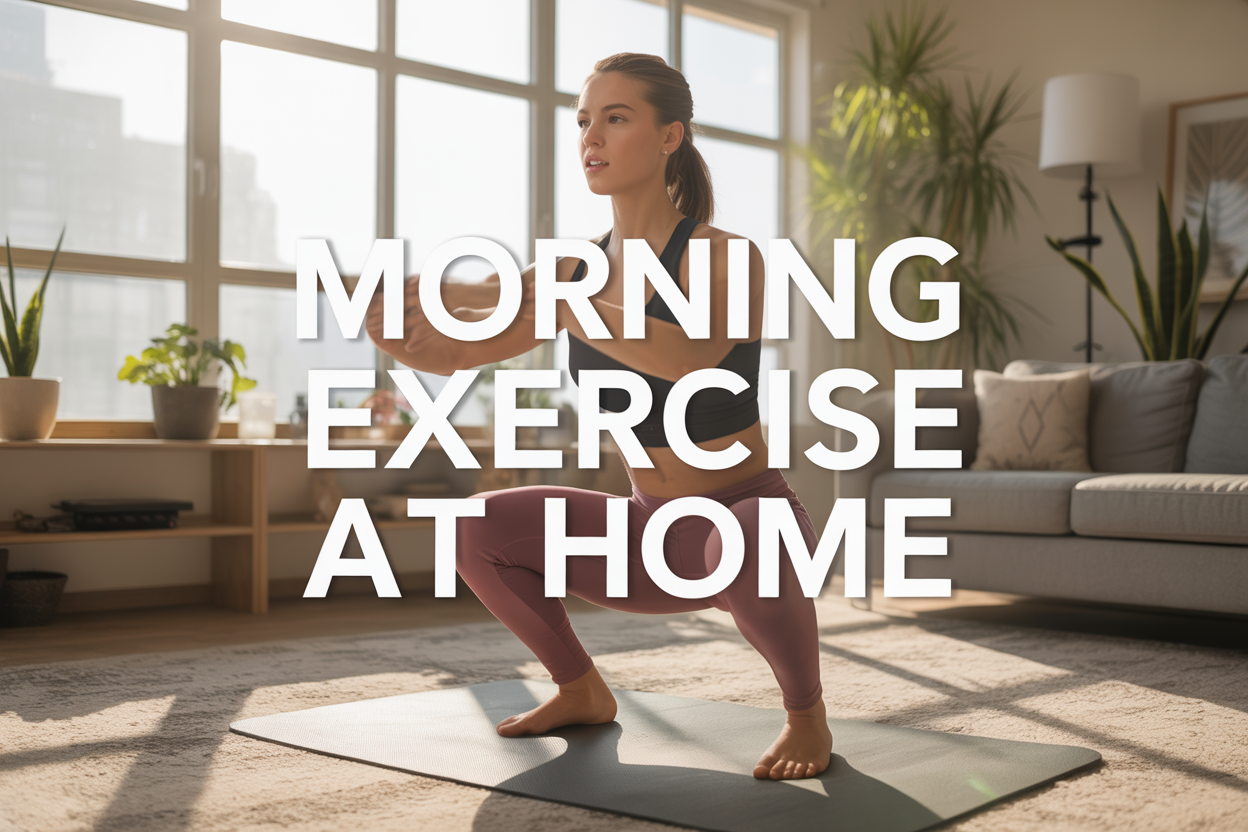
Starting a morning exercise routine for beginners at home no equipment doesn’t require a gym membership or fancy gear. I designed this guide from my own experience for busy people who want to jumpstart their fitness journey from the comfort of their living room.
Getting your body moving first thing in the morning boosts energy, improves mood, and sets a positive tone for your entire day. You can build strength, improve cardiovascular health, and develop lasting habits using nothing but your body weight.
We’ll walk you through essential bodyweight cardio exercises that get your heart pumping and strength-building moves that target major muscle groups. You’ll also learn proper warm-up techniques to prepare your body and cool-down methods to aid recovery. By the end, you’ll have a complete routine you can start tomorrow morning.
Benefits of Starting Your Day with Exercise
Boosts energy levels for the entire day
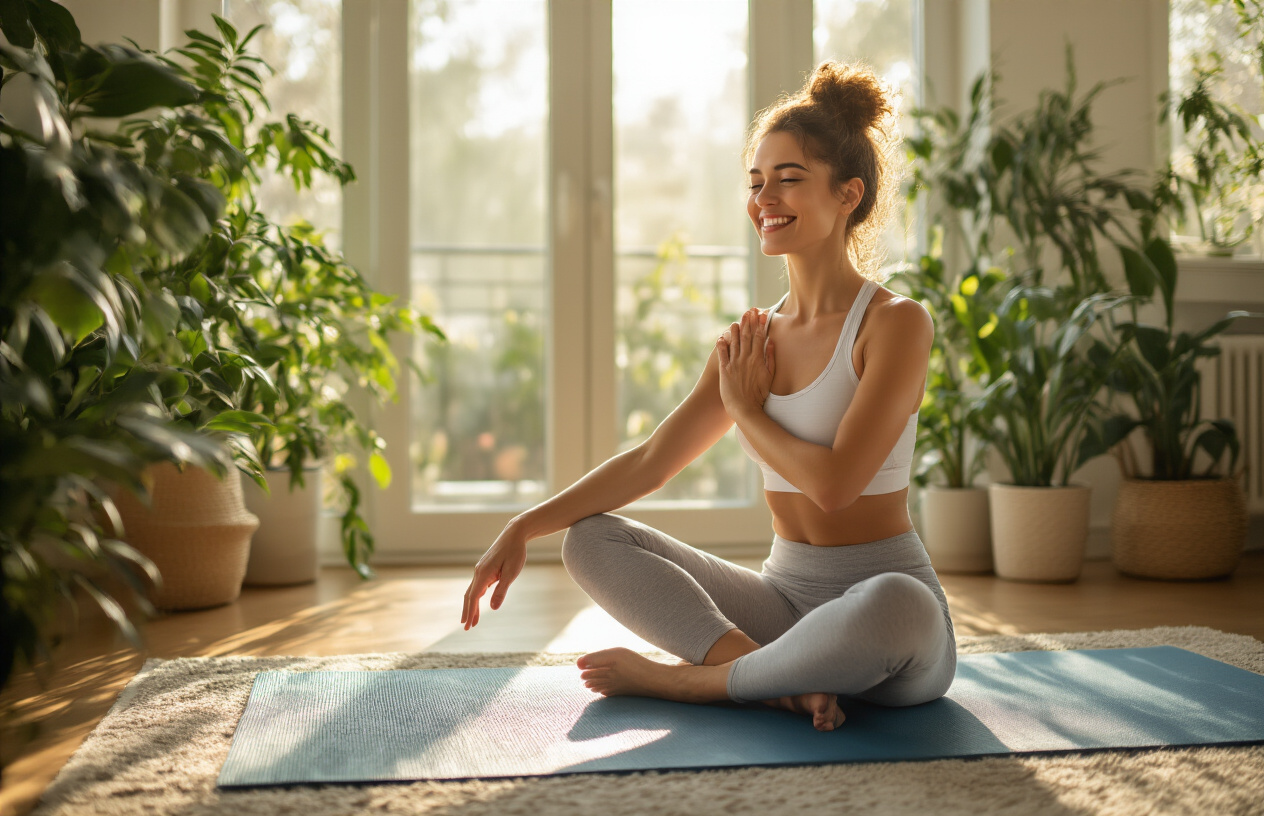
Morning exercise acts as a natural energy amplifier that lasts well beyond your workout session. When you move your body first thing in the morning, you increase blood circulation and oxygen flow throughout your system, delivering essential nutrients to your muscles and organs. This enhanced circulation creates a sustained energy boost that coffee simply can’t match.
Your body releases endorphins during physical activity, creating what many call a “natural high.” These feel-good chemicals not only elevate your mood but also provide lasting energy that carries you through your daily tasks with greater vitality. Unlike the temporary spike and crash from caffeine, exercise-induced energy remains steady and consistent.
Morning movement also jumpstarts your cardiovascular system, improving heart rate variability and blood pressure regulation. This cardiovascular activation helps your body maintain optimal energy levels throughout the day, reducing that afternoon slump that many people experience.
Improves mental clarity and focus
Physical activity in the morning creates powerful changes in your brain chemistry that enhance cognitive function. Exercise increases the production of brain-derived neurotrophic factor (BDNF), a protein that supports the growth and maintenance of brain cells, particularly in areas responsible for learning and memory.
The increased blood flow to your brain during exercise delivers oxygen and glucose, your brain’s primary fuel sources. This enhanced circulation improves neural connections and processing speed, making you sharper and more alert for hours after your workout.
Morning exercise also helps regulate neurotransmitters like dopamine, norepinephrine, and serotonin. These chemical messengers play crucial roles in attention, focus, and mood regulation. Regular morning workouts create lasting improvements in concentration and decision-making abilities.
Research shows that people who exercise in the morning perform better on cognitive tests, show improved problem-solving skills, and experience enhanced creativity compared to their sedentary counterparts.
Also Read : The Three Pillars of Life Balance
Kickstarts metabolism for better weight management
Your metabolic rate receives a significant boost from morning exercise through a phenomenon called Excess Post-Exercise Oxygen Consumption (EPOC). After your workout, your body continues burning calories at an elevated rate as it works to restore oxygen levels, remove metabolic waste, and repair muscle tissue.
Morning exercise on an empty stomach can be particularly effective for fat burning. With glycogen stores depleted from overnight fasting, your body turns more readily to stored fat for energy during exercise. This doesn’t mean you need to do intense workouts while fasted, but even moderate morning movement can enhance fat oxidation.
The metabolic boost from morning exercise extends far beyond the workout itself. Regular morning activity improves insulin sensitivity, helping your body better regulate blood sugar levels throughout the day. This improved glucose control prevents energy crashes and reduces cravings for high-calorie, processed foods.
Your body also becomes more efficient at utilizing nutrients when you establish a consistent morning exercise routine. This improved metabolic flexibility means your body can switch more easily between burning carbohydrates and fats for fuel, optimizing energy production based on availability and demand.
Reduces stress and enhances mood
Morning exercise serves as a powerful stress-buster that sets a positive tone for your entire day. Physical activity triggers the release of endorphins, your body’s natural mood elevators, which create feelings of happiness and well-being that can last for hours.
Exercise also helps regulate cortisol, your primary stress hormone. While cortisol naturally peaks in the morning to help you wake up, chronic elevation can lead to anxiety, mood swings, and health problems. Regular morning workouts help normalize cortisol patterns, reducing overall stress levels.
The rhythmic nature of many exercises, such as walking, cycling, or bodyweight movements, can have a meditative effect. This moving meditation helps quiet mental chatter and promotes mindfulness, creating a sense of calm that carries into your daily activities.
Morning exercise provides a sense of accomplishment before your day officially begins. This early win creates positive momentum and confidence that influences how you approach challenges throughout the day. The discipline required to maintain a morning routine also builds mental resilience and self-efficacy.
Social benefits emerge when you exercise with family members or join online fitness communities. These connections provide accountability and support while reducing feelings of isolation that can contribute to stress and depression.
Essential Preparation for Your Morning Routine
Set up your workout space the night before
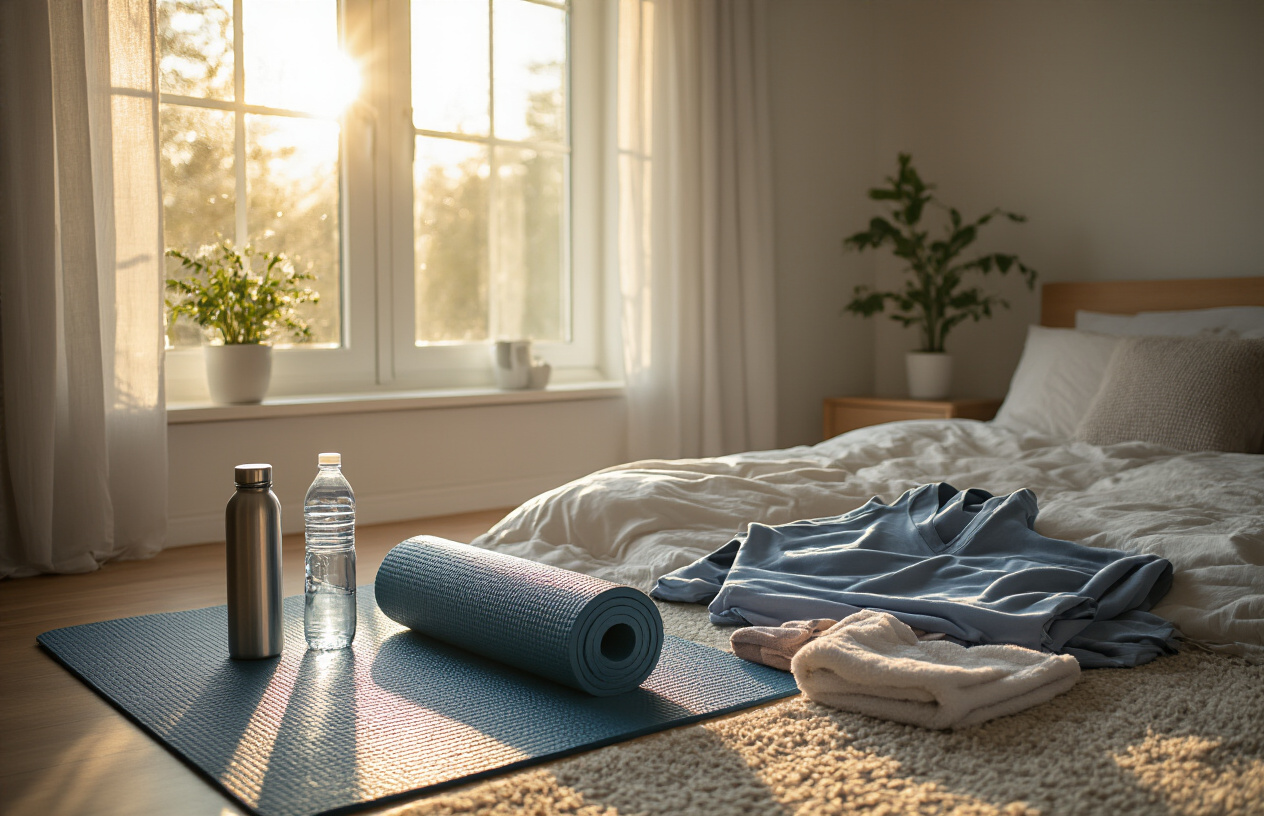
Creating a designated workout area before you go to bed removes the guesswork from your morning routine. Clear a space that’s roughly 6×6 feet where you can move freely without bumping into furniture or walls. Push coffee tables aside, move chairs out of the way, and ensure you have enough ceiling height for jumping or raising your arms overhead.
Lay out any props you might need, even though this routine requires no equipment. A yoga mat or towel provides cushioning for floor exercises and defines your workout boundary. Place a water bottle nearby to stay hydrated, and keep your phone handy if you’re following along with a workout video or using a timer app.
Good lighting makes a huge difference in your energy levels and safety. If possible, choose a spot near a window where natural light will filter in, or ensure your overhead lights are bright enough to see clearly. Poor lighting can lead to improper form or even minor injuries from missteps.
Consider the noise factor if you live in an apartment or have sleeping family members nearby. Carpeted areas or exercise mats help muffle the sound of jumping movements. If noise is still a concern, focus your preparation on identifying quieter exercise alternatives you can substitute during your routine.
Choose comfortable clothing that allows movement
Your workout clothes can make or break your morning exercise experience. Opt for moisture-wicking fabrics that pull sweat away from your skin, keeping you comfortable throughout your routine. Cotton feels soft initially but becomes heavy and clingy when wet, which can distract you from your movements.
Ideal clothing choices include:
- Stretchy leggings or athletic shorts that won’t ride up during squats or lunges
- Breathable tank tops or fitted t-shirts that won’t restrict arm movements
- Supportive sports bras for women that provide adequate coverage during jumping exercises
- Moisture-wicking socks to prevent blisters and maintain grip
Avoid loose-fitting clothes that might get in your way during exercises like burpees or mountain climbers. Baggy shirts can flip over your head during inverted movements, while oversized shorts might bunch uncomfortably during leg exercises.
Your footwear choice depends on your workout surface. Barefoot works well on carpeted areas and provides better balance awareness. Athletic shoes with good grip are essential for hardwood floors or outdoor spaces. Avoid socks alone on smooth surfaces, as they create a slip hazard.
Lay out your entire outfit the night before, including undergarments and socks. This small step eliminates decision fatigue when you’re still groggy and helps you transition quickly from bed to workout mode.
Plan your 15-20 minute time slot
Timing your workout strategically sets you up for long-term success. Most beginners find 15-20 minutes manageable without feeling overwhelmed or rushed. This duration allows for a proper warm-up, effective exercise session, and cool-down period while still fitting into busy morning schedules.
Sample time breakdown:
- 3-4 minutes: Dynamic warm-up
- 10-12 minutes: Main workout (cardio and strength exercises)
- 2-4 minutes: Cool-down and stretching
Schedule your workout for the same time each day to build a consistent habit. Early risers might prefer 6:00-6:20 AM, while others find 7:00-7:20 AM works better with their natural rhythms. Choose a time that allows you to complete your routine without rushing to get ready for work or other commitments.
Build in a small buffer by waking up 5 minutes earlier than your planned start time. This cushion accounts for natural variations in your wake-up energy and prevents the stress of running behind schedule.
Set multiple alarms if needed, but place your phone across the room to force yourself out of bed. Consider using an alarm with gradually increasing volume or one that mimics natural sunlight to make waking easier.
Plan for potential obstacles by identifying backup time slots. If your primary morning time gets disrupted by early meetings or family obligations, having a predetermined alternative (like a lunchtime or evening slot) keeps you on track with your exercise goals.
Dynamic Warm-Up Exercises to Activate Your Body
Gentle neck rolls and shoulder shrugs
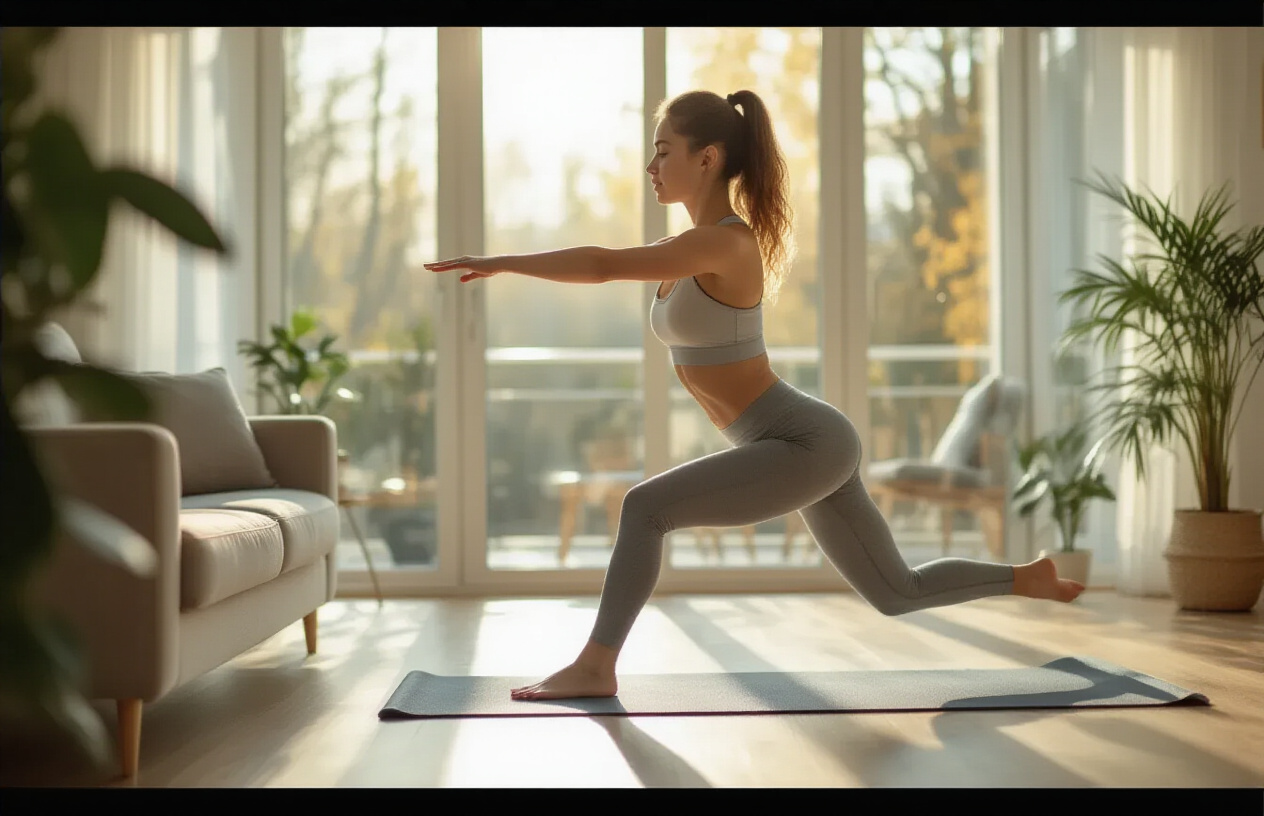
Starting your warm-up with gentle neck movements helps release tension that builds up overnight. Begin with slow neck rolls by dropping your chin to your chest, then rolling your head slowly to the right, back, left, and forward again. Complete 5-8 circles in each direction, moving deliberately without forcing any position.
Shoulder shrugs are perfect for awakening your upper body. Lift both shoulders toward your ears, hold for two seconds, then release them down with a gentle exhale. Repeat 10-15 times, focusing on the contrast between tension and relaxation. This movement activates the trapezius muscles and improves circulation to your neck and shoulders.
Arm circles and leg swings
Arm circles gradually increase your shoulder mobility and prepare your joints for more intense movement. Start with small circles, extending your arms out to your sides. Make 10 small circles forward, then reverse direction. Gradually increase the size of your circles until you’re making large, controlled movements that engage your entire shoulder girdle.
Leg swings target your hip flexors and hamstrings while improving balance. Hold onto a wall or sturdy furniture for support. Swing one leg forward and backward in a controlled pendulum motion, starting with small movements and gradually increasing the range. Complete 10-15 swings per leg, then switch to side-to-side swings to activate your hip abductors.
Light marching in place
Marching in place bridges the gap between static stretching and dynamic movement. Start by lifting your knees to hip height while maintaining good posture. Pump your arms naturally as you march, engaging your core to maintain stability. Begin slowly and gradually increase your pace over 30-60 seconds.
This exercise elevates your heart rate gently while activating your leg muscles, core, and improving coordination. Focus on landing softly on the balls of your feet and keeping your chest lifted throughout the movement.
Basic stretches for major muscle groups
Target your largest muscle groups with these foundational stretches. For your calves, step back into a gentle lunge position and press your back heel toward the ground. Hold for 15-20 seconds per leg.
Stretch your quadriceps by pulling your ankle toward your glutes while standing on one leg. Use a wall for balance if needed. For your hamstrings, place one foot slightly forward and hinge at your hips, reaching toward your toes.
Don’t forget your arms and torso. Reach one arm across your chest and gently pull it closer with your opposite hand. Finish with gentle torso twists, placing your hands on your hips and rotating slowly side to side to prepare your spine for movement.
Bodyweight Cardio Exercises for Heart Health
Modified Jumping Jacks for Beginners
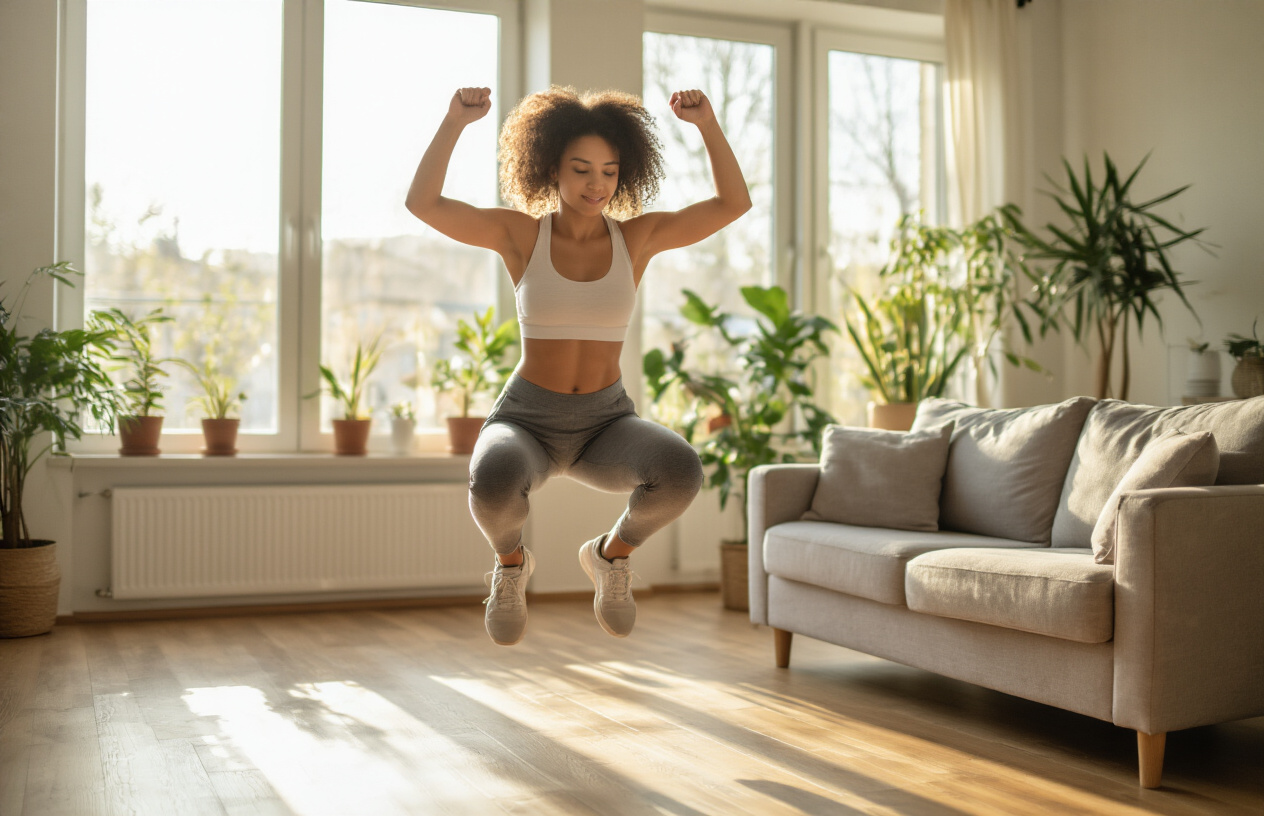
Traditional jumping jacks can be tough on your joints, especially first thing in the morning when your body is still waking up. Modified versions give you the same heart-pumping benefits without the impact. Start with step-touch jumping jacks by stepping one foot out to the side while raising your arms overhead, then step back to center and lower your arms. Alternate sides in a rhythmic motion for 30-60 seconds.
Another beginner-friendly option is seated jumping jacks. Sit on the edge of a sturdy chair with your feet together and arms at your sides. Open your legs while simultaneously raising your arms overhead, then return to starting position. This variation lets you control the intensity while still engaging your cardiovascular system.
For those ready to add a bit more challenge, try half jumping jacks. Keep one foot planted on the ground while stepping the other foot out and back, coordinating your arm movements accordingly. This reduces impact while building coordination and stamina.
High Knees and Butt Kicks
High knees are fantastic for getting your heart rate up quickly while strengthening your hip flexors and improving coordination. Stand tall and march in place, bringing each knee up toward your chest as high as comfortable. Your arms should pump naturally as if you’re running. Start with 20-30 seconds and gradually increase the duration.
Keep your core engaged and land softly on the balls of your feet. If full high knees feel too intense, try marching with a lower knee lift or perform the movement while holding onto a wall or chair for support.
Butt kicks complement high knees perfectly by targeting the back of your legs. Jog in place while kicking your heels toward your glutes. Focus on quick, light steps rather than trying to actually touch your heels to your butt. Your knees should point toward the ground, and your upper body should remain upright.
Combine these exercises by alternating 30 seconds of high knees with 30 seconds of butt kicks for a dynamic cardio circuit that targets different muscle groups while keeping your heart rate elevated.
Step-ups Using Stairs or Sturdy Surface
Step-ups transform any stair or sturdy surface into effective cardio equipment. Find a step that’s about knee height or lower – your bottom stair, a sturdy box, or even a park bench works perfectly. Step up with your right foot, placing your entire foot on the surface, then bring your left foot up to meet it. Step back down with control, leading with the same foot.
Focus on using the muscles of the stepping leg to lift yourself up rather than pushing off with your back foot. Keep your chest up and core engaged throughout the movement. Start with 10-15 step-ups on each leg, or alternate legs for 1-2 minutes continuously.
To increase intensity without equipment, try adding a knee drive at the top. As you step up with your right foot, drive your left knee toward your chest before stepping down. This variation adds a balance challenge while increasing the cardiovascular demand.
Safety is key with step-ups. Make sure your surface is stable and won’t slide. Test it with gentle pressure before starting your workout. If you feel unsteady, hold onto a handrail or wall until your balance and strength improve.
Strength Building Exercises Using Your Body Weight
Wall Push-Ups for Upper Body Strength
Wall push-ups are the perfect gateway exercise for building chest, shoulder, and arm strength without intimidation. Stand arm’s length from a wall and place your palms flat against it at shoulder height. Keep your body straight as you lean in and push back out, controlling the movement both ways. This exercise targets your pectorals, deltoids, and triceps while being incredibly joint-friendly.
Start with 8-12 repetitions and focus on maintaining proper form rather than rushing through the movement. Your feet should remain planted, and your core engaged throughout. As you get stronger, step further back from the wall to increase the angle and difficulty. The beauty of wall push-ups lies in their scalability – you can adjust the challenge simply by changing your distance from the wall.
Chair-Assisted Squats for Lower Body Power
Chair-assisted squats teach proper squat mechanics while building leg and glute strength progressively. Position a sturdy chair behind you and slowly lower down as if sitting, barely touching the seat before standing back up. This exercise works your quadriceps, hamstrings, glutes, and calves while improving hip mobility and knee stability.
Begin with 10-15 repetitions, focusing on controlled movement and proper alignment. Keep your knees tracking over your toes and your chest proud. The chair acts as both a safety net and a depth guide, helping you develop muscle memory for correct squat patterns. As your strength improves, try hovering above the chair without touching it, or remove the chair entirely for full bodyweight squats.
Modified Planks for Core Stability
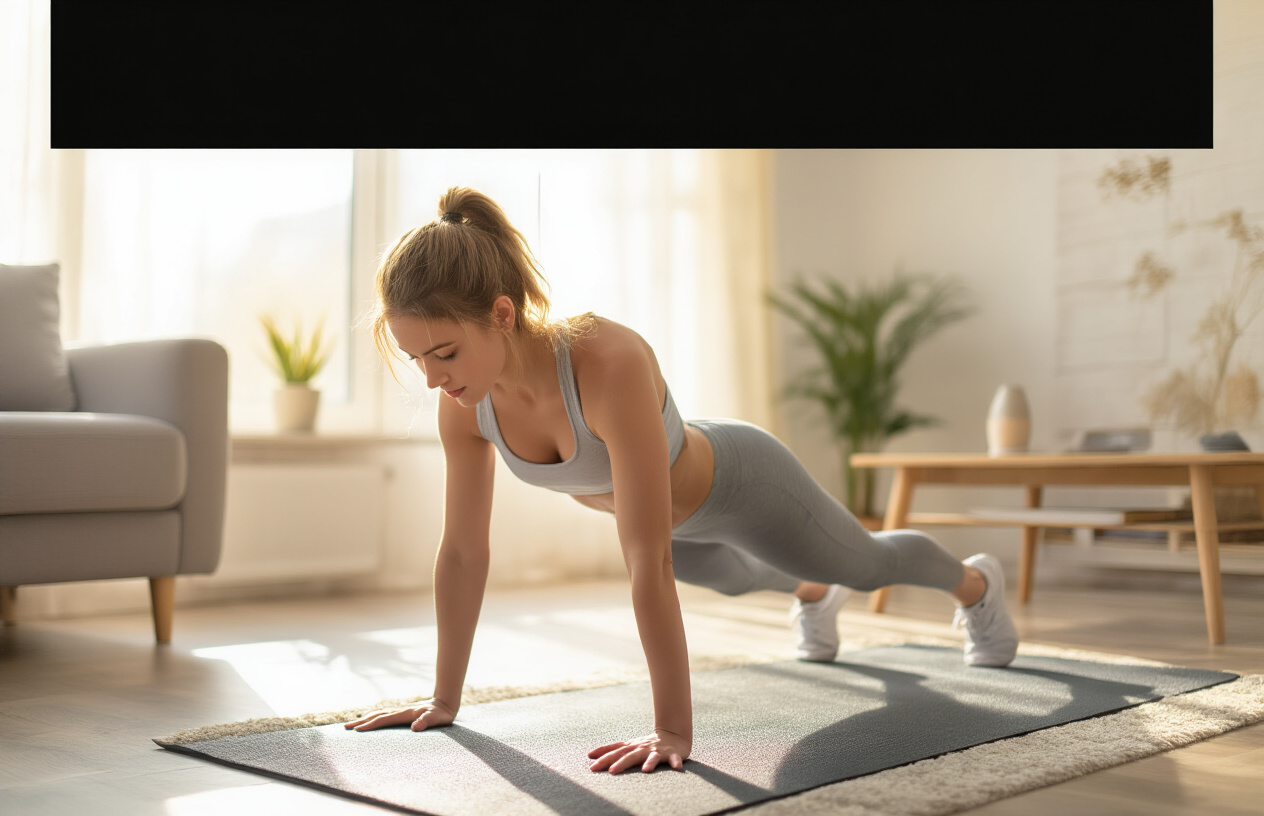
Modified planks on your knees provide exceptional core strengthening without the intensity of full planks. Start on your hands and knees, then walk your hands forward while keeping your knees planted. Your body should form a straight line from your head to your knees, engaging your entire core system.
Hold this position for 15-30 seconds initially, building up to longer durations as your strength develops. Focus on breathing steadily while maintaining the position – avoid holding your breath. This exercise targets your rectus abdominis, transverse abdominis, and obliques while also engaging stabilizing muscles throughout your torso. The modified version allows beginners to build the necessary strength foundation before progressing to full planks.
Standing Calf Raises for Leg Definition
Standing calf raises are simple yet effective for strengthening your lower legs and improving ankle stability. Stand tall with feet hip-width apart and slowly rise up onto your toes, squeezing your calf muscles at the top. Lower back down with control, feeling the stretch in your calves.
Perform 15-20 repetitions with deliberate, controlled movement. You can hold onto a wall or chair for balance if needed. This exercise targets your gastrocnemius and soleus muscles, which are crucial for walking, running, and daily activities. For added challenge, try single-leg calf raises or hold the top position for a few seconds before lowering.
Glute Bridges for Posterior Chain Activation
Glute bridges are fantastic for strengthening your posterior chain while being completely floor-based. Lie on your back with knees bent and feet flat on the floor. Squeeze your glutes and lift your hips up, creating a straight line from your knees to your shoulders. Hold briefly at the top before lowering with control.
Start with 12-15 repetitions, really focusing on squeezing your glutes at the top of each rep. This exercise counters the effects of prolonged sitting while strengthening your glutes, hamstrings, and lower back. Keep your core engaged throughout the movement and avoid overarching your back. Glute bridges also help improve hip mobility and can alleviate lower back tension when performed regularly.
Cool-Down and Recovery Techniques
Deep breathing exercises for relaxation
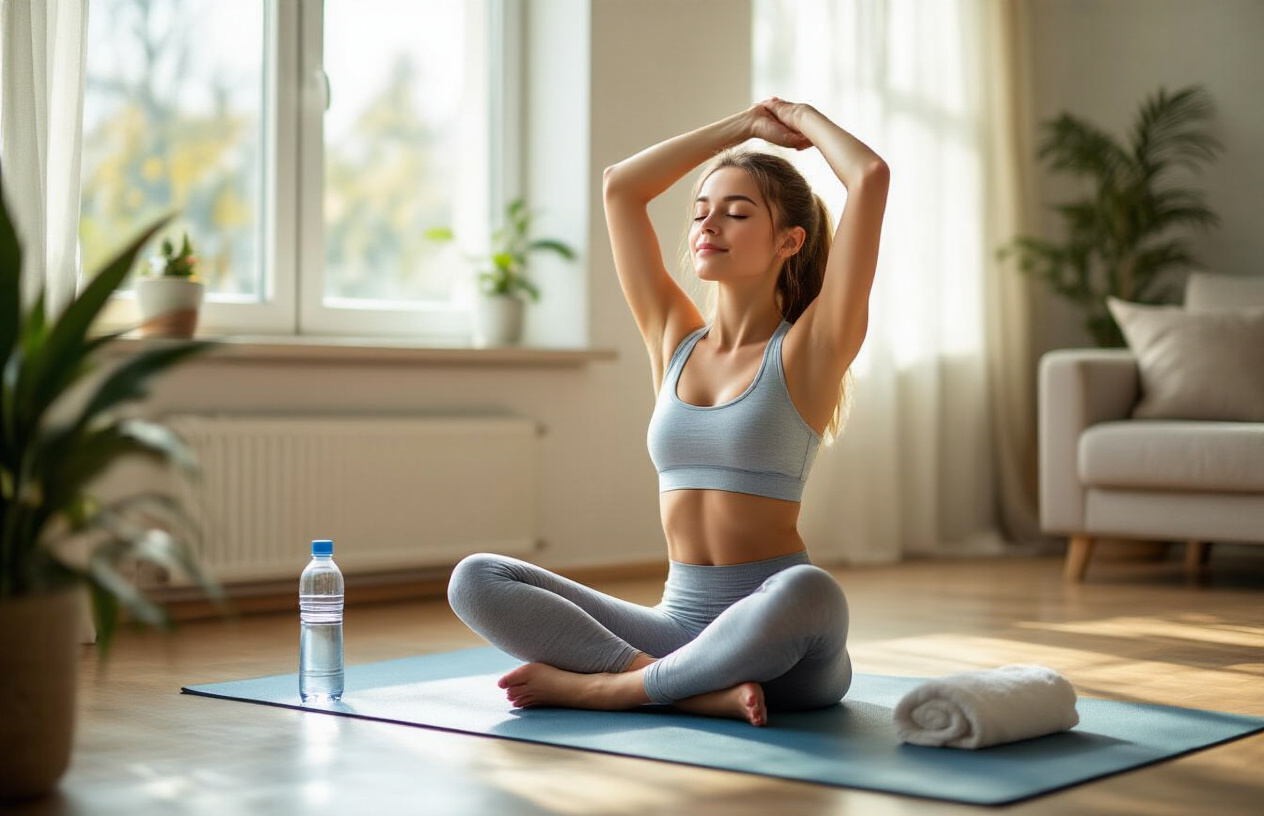
Your body needs time to transition from active mode to recovery after your morning workout. Deep breathing exercises help signal your nervous system to shift into relaxation mode while improving oxygen flow throughout your body.
Start with the 4-7-8 breathing technique: inhale through your nose for 4 counts, hold your breath for 7 counts, then exhale slowly through your mouth for 8 counts. Repeat this cycle 3-4 times while sitting or lying comfortably. This pattern activates your parasympathetic nervous system, reducing cortisol levels and promoting recovery.
Try box breathing for mental clarity: breathe in for 4 counts, hold for 4, exhale for 4, and hold empty for 4. Picture drawing a square with each phase of your breath. This technique helps center your mind before starting your day.
Diaphragmatic breathing works wonders for releasing tension. Place one hand on your chest and another on your belly. Breathe deeply so only your bottom hand moves, keeping your chest relatively still. This engages your diaphragm fully and maximizes oxygen intake while calming your entire system.
Gentle stretches to prevent muscle tightness
Post-workout stretching prevents muscle stiffness and maintains flexibility, especially when you’ve just challenged your body with bodyweight exercises.
Hold a child’s pose for 30-60 seconds to stretch your back, hips, and shoulders. Kneel on the floor, touch your big toes together, and sit back on your heels. Extend your arms forward and lower your torso between your thighs.
The standing forward fold releases tension in your hamstrings and lower back. Stand with feet hip-width apart, hinge at your hips, and let your arms hang toward the floor. Bend your knees slightly if needed.
Seated spinal twist helps decompress your spine after all those squats and planks. Sit cross-legged, place your right hand behind you for support, and gently twist your torso to the right while your left hand rests on your right knee. Hold for 20-30 seconds each side.
Don’t skip the figure-four hip stretch. Lie on your back, cross your right ankle over your left knee, and gently pull your left thigh toward your chest. This targets tight hip flexors that often get worked during morning exercises.
Hydration and mindful moment setting
Your body loses fluids through sweat and increased breathing during exercise, making immediate rehydration essential for proper recovery and sustained energy throughout your day.
Drink 16-20 ounces of water within 30 minutes of finishing your workout. Room temperature water absorbs faster than ice-cold water, though both work effectively. Add a pinch of sea salt or a squeeze of lemon if you’ve sweated significantly during your routine.
Create a mindful transition ritual while you hydrate. Sit quietly for 2-3 minutes and reflect on how your body feels after moving. Notice areas that feel energized, any lingering tension, and your overall mood shift from pre-workout to post-workout.
Set your daily intentions during this quiet moment. Think about what you want to accomplish today and how your morning exercise session has prepared you mentally and physically. This practice connects your physical achievement to your broader daily goals.
Keep a workout journal nearby and jot down quick notes about how the routine felt, which exercises challenged you most, and what you might adjust tomorrow. This mindful documentation helps build self-awareness and tracks your progress over time.
Consider this cool-down period sacred time for yourself. Put away your phone, avoid jumping straight into emails or news, and simply exist in the present moment your body has created through movement and breath.
Building Consistency and Progression Over Time
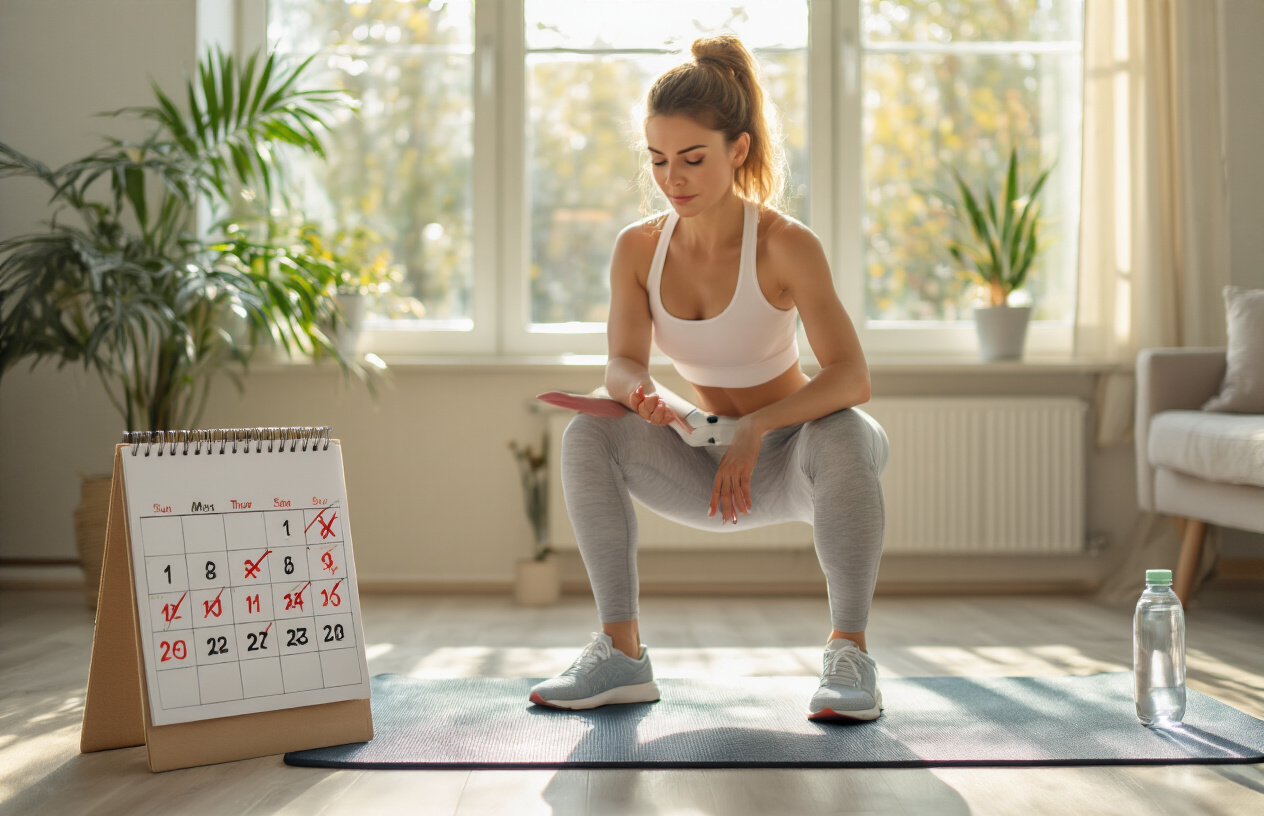
Start with 3 days per week commitment
Beginning a morning exercise routine doesn’t mean you need to work out every single day. Starting with three days per week gives your body time to adapt while building a sustainable habit. Choose Monday, Wednesday, and Friday, or pick any three non-consecutive days that work best with your schedule.
This approach prevents burnout and reduces the risk of injury that comes with doing too much too soon. Your muscles need recovery time to repair and strengthen, especially when you’re new to regular exercise. Three days also feels manageable mentally – you won’t feel overwhelmed by the commitment.
Mark these days on your calendar and treat them like important appointments you can’t miss. Set your workout clothes out the night before and place your alarm across the room so you have to get up to turn it off. These small actions make it easier to follow through when motivation runs low.
Track your progress with simple methods
Keeping track of your workouts doesn’t require fancy apps or complicated systems. A simple notebook works perfectly fine. Write down the date, which exercises you did, how many repetitions, and how you felt during the session.
Rate your energy level before and after each workout on a scale of 1-10. You’ll start noticing patterns – maybe you feel more energetic on certain days or perform better at specific times. This information helps you optimize your routine.
| Week | Push-ups | Squats | Plank (seconds) | Energy Level |
|---|---|---|---|---|
| 1 | 5 | 10 | 20 | 6/10 |
| 2 | 8 | 15 | 30 | 7/10 |
| 3 | 12 | 20 | 45 | 8/10 |
Take progress photos once a week in the same lighting and pose. Physical changes happen gradually, and photos capture improvements you might not notice day-to-day. Even if the scale doesn’t move much, you might see better posture, increased muscle definition, or a more confident stance.
Gradually increase exercise duration and intensity
Your first workout might only last 10-15 minutes, and that’s perfectly acceptable. Start where you are, not where you think you should be. Each week, add 2-3 minutes to your total workout time or increase repetitions by 2-3 per exercise.
If you started doing 5 push-ups, aim for 7-8 the following week. Can only hold a plank for 15 seconds? Try for 20 seconds next time. These small increases add up quickly without shocking your system.
Listen to your body’s signals. Some days you’ll feel strong and want to push harder, while other days you might need to dial it back. Both scenarios are normal. The key is showing up consistently rather than having perfect workouts every time.
When exercises become too easy, modify them to increase difficulty. Regular squats can become jump squats. Standard push-ups can progress to decline push-ups with your feet elevated. This natural progression keeps your workouts challenging and your muscles growing stronger.
Working out first thing in the morning doesn’t require a gym membership or fancy equipment. With just your body weight and a small space at home, you can kickstart your day with energy-boosting cardio, strength-building moves, and proper warm-up and cool-down routines. The combination of jumping jacks, squats, push-ups, and stretches can transform how you feel throughout the entire day while building real strength and endurance over time.
The real magic happens when you make morning exercise a habit rather than a one-time event. Start small, listen to your body, and gradually add more exercises or reps as you get stronger. Your future self will thank you for those extra few minutes of movement each morning – better mood, improved energy levels, and increased confidence are just the beginning of what regular morning workouts can bring to your life.
Written by Azhar Huzaifa
Azhar Huzaifa is the founder of LifeBalanceInsight.com.
He writes about money psychology, health, and life balance,
helping middle-class families reduce stress and live better lives.