
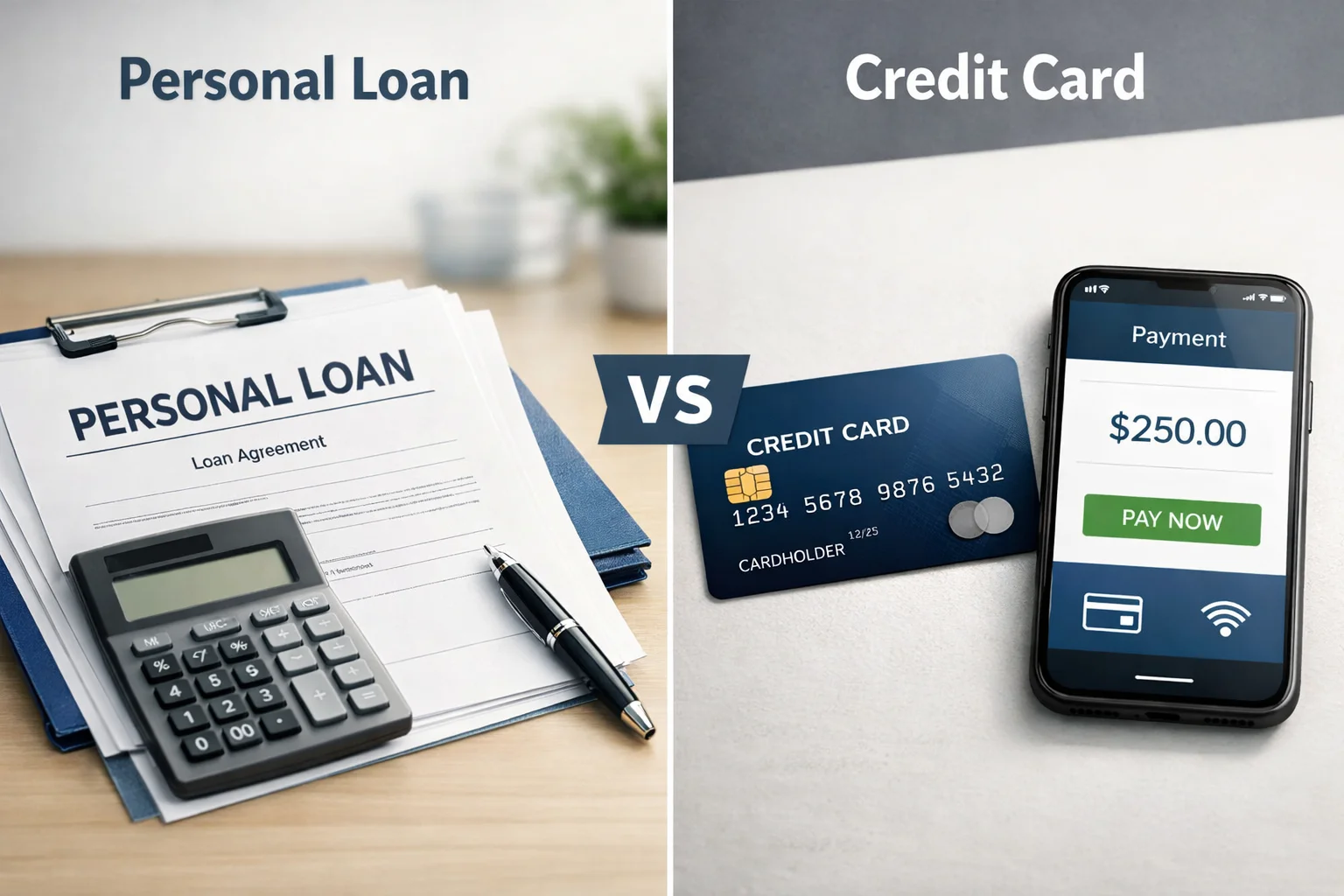
Borrowing money is easy today. Saving money while borrowing is the hard part.
Many people face the same question: should I use a personal loan or a credit card? Both can help in the short term. Both can also cost more than expected if used carelessly.
This guide explains how each option works, where the real costs come from, and which one may save you more money. You’ll also see realistic alternatives that might fit your situation better.
There is no one-size-fits-all winner. The better choice depends on why you’re borrowing, how fast you can repay, and your financial habits.
Understanding the Basics

Before comparing costs, you need to understand what each tool is designed to do.
What Is a Personal Loan?
A personal loan gives you a fixed amount of money upfront. You repay it in equal monthly installments over a set period.
Key features:
- Fixed repayment schedule
- Usually fixed interest rate
- Clear payoff timeline
- Predictable monthly payments
Personal loans are often used for larger expenses, debt consolidation, or planned purchases.
What Is a Credit Card?
A credit card gives you a revolving credit line. You borrow as needed and repay over time.
Key features:
- Flexible borrowing
- Minimum monthly payments
- Variable interest rates
- Ongoing access to credit
Credit cards are designed for short-term spending and convenience.
Where the Real Cost Comes From
Many people only look at interest rates. That’s important, but it’s not the whole story.
Interest Structure Matters
Personal loans usually have lower interest rates than credit cards. The difference can be significant, especially for borrowers with good credit.
Credit cards often carry higher rates because they offer flexibility and convenience.
But interest alone does not determine total cost.
Repayment Behavior Changes Everything
A personal loan forces structured repayment. You cannot stretch payments forever. This structure often reduces total interest paid.
Credit cards allow minimum payments. This flexibility feels helpful, but it can extend debt for years and increase interest costs.
In simple terms:
- Structure saves money
- Flexibility can cost more
Personal Loan: When It Saves You More Money

A personal loan tends to save money in specific situations.
Large Planned Expenses
If you need to borrow a significant amount, a personal loan often costs less due to lower rates and fixed repayment.
You know exactly:
- Monthly payment
- Total interest
- Payoff date
That clarity prevents long-term debt cycles.
Debt Consolidation
Many borrowers use personal loans to combine high-interest credit card balances into one lower-rate payment.
This strategy can:
- Reduce total interest
- Simplify budgeting
- Create a clear exit plan
It only works if you avoid running new card balances afterward.
Discipline Through Structure
Fixed payments create accountability. You cannot endlessly delay repayment. That structure often leads to faster debt freedom.
Credit Card: When It Can Save You More Money
Credit cards are not automatically expensive. Used wisely, they can cost very little.
Short-Term Purchases
If you repay the balance in full each month, you avoid interest entirely.
In that case:
- Borrowing is effectively free
- You gain rewards or cashback
- You maintain liquidity
This is where credit cards shine.
Emergency Flexibility
Unexpected expenses happen. Credit cards provide instant access without loan approval delays.
Used responsibly, they offer breathing room without long-term commitment.
Promotional Interest Offers
Some cards provide introductory low or zero interest periods.
These offers can save money if:
- You repay before the promotion ends
- You understand the terms
Missing deadlines can erase the benefit.
Comparing Total Cost: Realistic Scenarios

Let’s talk about behavior, not math tricks.
Scenario 1: Carrying Debt for Years
If you carry a balance long term:
- Credit cards often cost more
- Interest compounds quickly
A personal loan usually wins here because of structured repayment and lower rates.
Scenario 2: Paying Quickly
If you repay within weeks or months:
- Credit cards may cost nothing
- A loan may involve fees or interest
The card becomes the cheaper tool.
Scenario 3: Financial Discipline
People who stick to a payoff plan benefit from loans.
People who repay monthly benefit from cards.
Habits matter more than product features.
Hidden Costs to Watch
Borrowing always carries extra considerations.
Personal Loan Fees
Some lenders charge:
- Origination fees
- Late payment fees
These add to total borrowing cost.
Credit Card Traps
Common cost drivers include:
- High interest after missed payments
- Penalty rates
- Balance rollover
Understanding terms prevents surprises.
Psychological Impact of Each Option
Money decisions are emotional as much as financial.
Loans Encourage Closure
A personal loan feels like a project with an end date. That clarity motivates repayment.
Cards Encourage Ongoing Spending
Credit cards keep credit available. Some people spend more when limits remain open.
Self-awareness helps you choose wisely.
Which Option Usually Saves More?
Here’s the honest answer:
A personal loan usually saves more money for long-term borrowing.
A credit card saves more when balances are paid quickly.
There is no universal winner.
Savings depend on:
- Borrowing purpose
- Repayment speed
- Spending discipline
- Interest rate access
The best choice aligns with your behavior, not marketing promises.
Situations Where Neither Option Is Ideal
Borrowing is not always the smartest path.
Consider alternatives before committing.
Emergency Savings
Cash reserves eliminate interest entirely.
Even small savings reduce reliance on credit.
Payment Plans From Providers
Medical offices, retailers, and service providers sometimes offer structured payment options with lower costs.
Credit Union Loans
Community lenders may offer better rates than large banks.
Buy Now, Pay Later (Use Carefully)
Short installment plans can help, but late fees accumulate quickly if misused.
Delayed Purchase Strategy
Waiting and saving often costs nothing. It also prevents impulse debt.
How to Decide for Your Situation
Ask yourself:
- How fast can I realistically repay?
- Do I need structure or flexibility?
- Am I solving a short-term need or a long-term expense?
- Will this borrowing improve or strain my budget?
Honest answers guide smarter choices.
Practical Tips to Save Money Regardless of Choice

No matter what you use, smart habits protect your wallet.
Compare Rates Before Borrowing
Never accept the first offer. Small rate differences create large savings over time.
Borrow Only What You Need
Extra borrowing increases interest and repayment pressure.
Automate Payments
Consistency prevents late fees and protects credit health.
Track Spending Behavior
Awareness reduces repeat borrowing cycles.
The Bottom Line
Personal loans and credit cards are tools, not solutions.
A personal loan often saves more money for planned, long-term borrowing because of lower rates and structured repayment.
A credit card can save money when balances are paid quickly and used with discipline.
The real winner is responsible behavior.
When borrowing matches your habits and goals, costs stay manageable. When it doesn’t, debt grows quietly.
Choose based on how you actually handle money — not how you hope you will.
That honesty saves more than any interest rate ever will.